
Economy
Cahya Mata Sarawak (CMS) gets “new” audit chief, yet irregularities remain unanswered
KUALA LUMPUR - On September 28, 2026, the Cahya Mata Sarawak Berhad (CMS) board announced the reappointment of Jeyabalan A/L S.K. Parasingam as Group Audit Committee chairman, a post he had held from June 28, 2021, to February 18, 2025. Jeyabalan replaced his predecessor, Gee Siew Yoong, who suddenly resigned from all her CMS posts on September 18, 2026.
Gee first joined CMS three years ago as its Independent Non-Executive Director on September 18, 2023, and was appointed as Group Audit Committee chairman on February 18, 2025. Jeyabalan, who is also CMS Independent Non-Executive Director (since 22 June 2021), will work to advise the Board, along with two other audit committee members - CP (Rtd) Dato’ Mohd Azman Ahmad Sapri (also an Independent Non-Executive Director) and Umang Nangku Jabu (also an Independent Non-Executive Director).
Why did CMS decide to reappoint a former Group Audit Committee chairman after appointing a total outsider? Furthermore, who is Jeyabalan? A saviour, or a convenient and loyal replacement? This is especially true during a chaotic chapter for the Sarawak-based conglomerate, whose share prices are underperforming badly, profits are dwindling rapidly, loans are piling up, and it faces countless battles in Court with joint venture partners. For now, we will focus on the 76-year-old Gee, who, despite her sudden exit, may be one of the main actresses in the CMS saga. We’ll highlight key details of what she has done at CMS over the last three years, along with her past roles and controversies. These are details shareholders and investors in CMS need to know to protect their investments and to start taking note of the whole charade at the top of the Sarawak-based conglomerate.
Gee’s exit and entry into CMS, her credentials
In announcing her exit on September 18 this year, the CMS Board cited “personal reasons” for her resignation, said Gee had no disagreements with the board, and said no matters required shareholders’ attention. Yet when she joined the same CMS Board on September 18, 2023, CMS touted her credentials, praising her for more than 50 years of experience in public accounting and the corporate sector across multiple industries, as both an executive and a director. So why did she leave? Were three years enough to do what she was called to do? Was it really for personal reasons? Interestingly, a current search for her name on the CMS official website returned zero entries. Suddenly, Gee was erased as if she was never part of the company’s history.
Let's look more closely at Gee’s credentials below;
Gee’s profile listed her as a member of the Malaysian Institute of Accountants and the Malaysian Institute of Certified Public Accountants, with more than 50 years of exposure in public accounting and the corporate sector at major Malaysian listed companies, She began her career with PriceWaterhouse in 1969, and her last position there was Senior Audit Manager and Continuing Education Manager before she left in 1981. She then joined the Selangor Pewter Group as Group Financial Controller. During that period, she was seconded to the USA from 1983 to 1984 as Chief Executive Officer of Senaca Crystal Inc., a company in the Selangor Pewter Group that was undergoing reorganisation under Chapter XI of the US Bankruptcy Code. She later became the Personal Assistant to the Executive Chairman of Lipkland Group from 1985 until 1987. Bank Negara Malaysia then appointed Gee as Executive Director and Chief Executive of Supreme Finance (M) Berhad, a financial institution undergoing rescue and reorganisation under the Central Bank's supervision until the reorganisation was completed in 1991. She later joined Land & General Berhad as Group Divisional Chief, Management Development Services in 1993 before joining Multi-Purpose Capital Holdings Berhad as Executive Assistant to the Chief Executive in 1997 until 1999. During this period, she also served as a Director of Multi-Purpose Bank Berhad, Multi-Purpose Insurans Berhad and Executive Director of Multi-Purpose Trustee Berhad. She also served as a director in SapuraKencana Petroleum Berhad, later known as Sapura Energy Berhad, Telekom Malaysia Berhad and Tenaga Nasional Berhad.
A dead ringer for conflicts of interest
In 2019, Gee had to vacate her seat on the Telekom Malaysia (TM) Board of Directors due to a conflict of interest with her similar post on the Tenaga Nasional Berhad (TNB) Board. The TM Board considered this a serious issue. It recommended that shareholders not re-elect Gee at the upcoming Annual General Meeting (AGM), as TNB is the national telco’s direct competitor in the broadband market. Despite the shareholders' votes against the board’s resolution at the TM AGM, Gee retired from TM’s Board at the conclusion of the AGM. Notably, despite the TM Board’s objection, Gee still decided to contest and, after winning, left the company abruptly. Perhaps an insight into what personal reasons can look like.
Gee’s Sapura Energy connection
When a corporate scandal hit Sapura Energy Bhd in 2018 over the obscene amount of remuneration paid to its then president and Chief Executive Officer (CEO), Tan Sri Shahril Shamsuddin, Gee was there as its Independent Non-Executive Director and Chairman of the Board Audit Committee.
The Edge interviewed Gee along with Sapura Energy’s then Chairman and Non-Independent Non-Executive Director, Datuk Hamzah Bakar, who was also chairman of the board remuneration committee, with both defending Shahril’s high pay package and remuneration, saying it was in line with international standards but exorbitant from a Malaysian perspective. According to The Edge, in FY2018, Shahril took home RM55 million in bonus payments and RM16.56 million in salary and other emoluments. The company also paid RM43.4 million in intellectual property rights payments to Sapura Holdings Sdn Bhd, a company controlled by Shahril and his brother, Datuk Shahriman Shamsuddin, a non-independent non-executive director of Sapura Energy.
In a nutshell, Sapura Energy paid close to RM115 million to Shahril in a financial year when the company suffered a net loss of RM2.5 billion on revenue of RM5.89 billion. Fast forward, Sapura Energy, once a leading oil and gas services provider in the region, has been classified as a PN17 company since 2022 due to financial distress. Its turnaround plan proceeded against the backdrop of an ongoing family dispute among Sapura Holdings main shareholders — Shahriman and his brother Shahril.Sapura Energy Bhd officially rebranded to Vantris Energy Bhd effective August 1, 2025, following shareholder approval and the issuance of the Certificate of Incorporation on Change of Name. Previously, the company had adopted the Sapura Energy name in March 2017 after being known as SapuraKencana Petroleum Bhd from May 2012. Gee was no stranger to Sapura’s scandal, as she served as an Independent Non-Executive Director of SapuraCrest Petroleum Berhad from 2001 to 15 May 2012. She also joined the Board of Sapura Resources Berhad as an Independent Non-Executive Director on 25 August 2009 and served on its Board Audit Committee. On May 21, 2020, Gee finally exited the company by resigning from all her posts as Independent Non-Executive Director, Chairman of the Audit Committee, and Member of the Nomination Committee.
Other fast in, fast out acts by Gee
Interestingly, Gee was also brought in briefly at Malaysia Smelting Corporation Berhad, when she was appointed Independent Non-Executive Director on September 18, 2014, then appointed to its Audit Committee on March 17, 2015. Yet for reasons unknown, she resigned from her posts there on March 18, 2016, after just a year on its Audit Committee and two years in the company. Similarly, Gee was also appointed as an Independent Non-Executive Director and Member of the Audit Committee at Scomi Engineering Bhd on September 6, 2001.Yet again, she made a hasty exit, resigning from all her posts in the company barely a year later, on April 26, 2002.
Back to Gee’s three years in CMS
Coming back to recent times, before Gee’s departure, she was highlighted as having a conflict of interest in CMS, as she was chairman of the CMS Group Audit Committee, a position she held while also serving as chairman of Cahya Mata Phosphates Industries Sdn Bhd (CMPI), the subsidiary at the centre of CMS’s long-running phosphate debacle.This is a glaring governance problem, as her positions could be seen as a conflict of interest for CMS, which had invested close to RM1 billion in CMPI through shares, loans and advances. During her time at CMS, the phosphate project experienced years of delays and ongoing litigation with Syarikat SESCO Berhad (formerly Sarawak Electricity Supply Corporation), which led to a prolonged interruption to electricity supply (a RM342 million penalty hanging over the company’s head). CMPI also recorded two separate write-offs: first, a reduction in the recorded value of inventories totalling RM52 million; second, money CMPI advanced to contractors and wrote off, again totalling RM52 million. Together, the charges total RM104 million, during a time when CMPI had not begun commercial operations and yet had its electricity supply cut in July 2023 and restored in September 2025.
Will shareholders or authorities review this in the near future? So many questions have been raised about whether the CMS board’s governance structure provided sufficient separation between operational responsibility for the phosphate subsidiary and independent oversight of the group’s financial reporting and controls. Gee’s dual roles meant that the same independent director chaired the Group Audit Committee while also chairing the phosphate subsidiary whose financial performance and project execution were attracting increasing scrutiny.
APHD’s earlier research highlighted this overlap and questioned whether the arrangement provided adequate segregation between operational involvement and audit oversight. How can audit and internal control reporting relating to the phosphate business be independently reviewed when the chairman of the Group Audit Committee also chaired the phosphate subsidiary? The concern becomes more pronounced if reports concerning the subsidiary were presented to, reviewed by or approved through a committee chaired by the same person responsible for the subsidiary.The available public disclosures do not establish that Gee personally approved her own audit reports, and that distinction should be maintained. However, authorities and shareholders should still scrutinise the matter going forward.
Back to CMS… the boardroom fight and court battle AGAIN between two brothers.
Impact from Gee’s CMS exit on ongoing Court cases
On September 28, 2026, The Dayak Daily reported that Judicial Commissioner Zaleha Mohd Yusuf Pan has delayed, for a second time, the delivery of her ruling in the ongoing case at the Kuching High Court, involving Dato Sri Mahmud Abu Bekir Taib, who is both a shareholder and director, in his bid to obtain and inspect the production and inspection of CMS’s records as allowed under Section 245 of the Malaysian Companies Act 2016. The High Court ruling was initially scheduled for September 25, 2026, but was not delivered as the Judge needed more time to prepare her decision, according to Abu Bekir’s counsel. The Dayak Daily reported that the court told both sides it would set a new date. As at the time of publication, APHD is not aware if a new date for the ruling has been set. The filing targeted CMS alongside five principal operating subsidiaries — Cahya Mata Phosphates Industries Sdn Bhd, Cahya Mata Cement Sdn Bhd, Oiltools International Sdn Bhd, Cahya Mata Oiltools Sdn Bhd and Cahya Mata Professionals Sdn Bhd.
Court records stated the application dates back to March 2025 (19 months ago), when Abu Bekir sought access to financial and accounting records involving Cahya Mata and several of its subsidiaries. He said he filed the application after his requests for the records went unanswered.
Interestingly, the delay in the ruling seems to have occurred in the same month as Jeyabalan’s appointment and Gee’s departure as the Audit Committee Chairman. As it stands, a favourable Court ruling on Abu Bekir’s application may help him uncover urgent matters and important questions that needed Gee’s statement. Yet, her total exit from CMS may make it difficult for anyone to address them swiftly within the company. Her replacement would likely lack the insight to answer them. For the readers' information, this Kuching High Court application is separate from other ongoing legal proceedings involving Abu Bekir and CMS, including the injunction proceedings and matters concerning his position as a company director.
Should the shareholders be worried?
CMS’s latest financial performance adds further context to the developments. As of September 30, its share closes at RM0.96, down from around RM1.26 a year earlier. With continuing uncertainty surrounding the phosphate project, the venture remains one of CMS’s largest outstanding operational and governance questions. The matter also carries a wider public interest dimension because CMS's institutional shareholders include Lembaga Tabung Haji and Urusharta Jamaah (UJSB), the latter wholly owned by the Minister of Finance Incorporated, according to public reports.
According to the CMS website, among its non-Taib family-linked major shareholders are:
Lembaga Tabung Haji (6.55 per cent), UJSB (4.84 per cent), Sarawak Economic Development Corporation (4.65 per cent), Employees Provident Fund Board (1.78 per cent), Etiqa Life Insurance Berhad (1.33 per cent) and Pertubuhan Keselamatan Sosial aka Perkeso aka Socso (0.70 per cent). So yes, these funds represent the people’s, or rakyat’s, hard-earned money invested to provide for their current safety and future well-being. Allegedly, perhaps it is time to raise an alarm about CMS irregularities, for the sake of the people’s future.
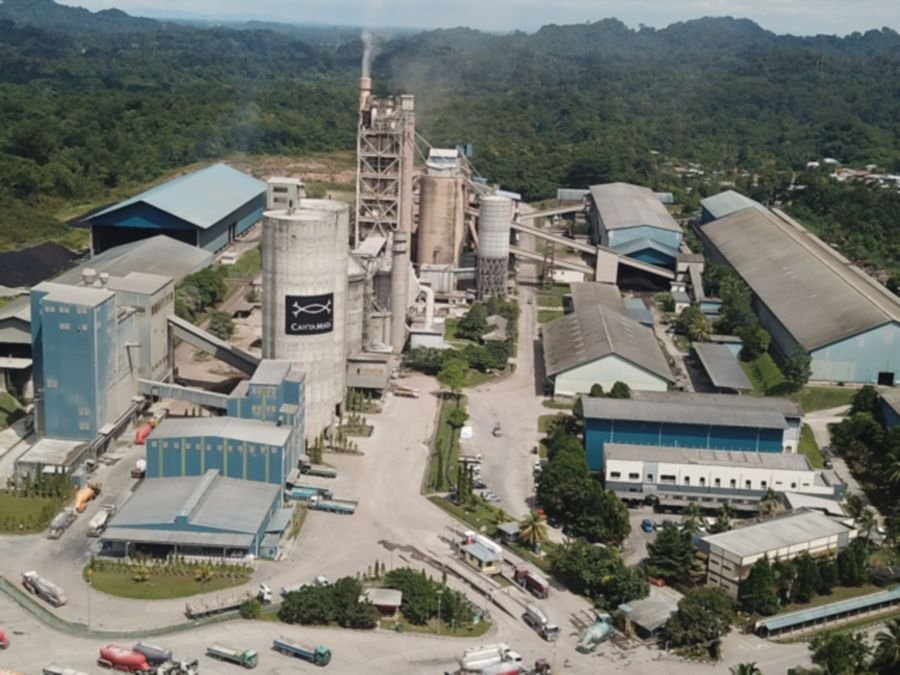
Photo: CMS Website
What's your reaction?
0

AWESOME!
0

LOVED
1

NICE
0

LOL
0

FUNNY
0

EW!
0

OMG!
0

FAIL!
Popular News


Recent News
Comments
Leave a Reply