
Economy
The Rare Earth Question Malaysia Cannot Avoid
Negeri Sembilan — Malaysia wants to become a trusted player in the global rare-earth economy. That ambition is now colliding with a far older question of authority, in one of the country's most unlikely settings. Recent events in Negeri Sembilan have brought customary rule, land rights and rare-earth development into the same conversation — and raised a governance question that extends well beyond the state's borders.
Governance starts at the top. In Negeri Sembilan, that principle carries unusual weight. The state's current political dispute centres on the institution of the Yang di-Pertuan Besar, but beneath the immediate contest lies a larger question: how power, custom, land and economic interest intersect in one of Malaysia's most distinctive states.
It would be premature to conclude that the dispute is driven by a struggle over land or resources. Any such connection would have to be established through documents, licences, company records and law. But the episode offers a rare window into a question foreign investors too often ask only after something has gone wrong: who, precisely, holds authority over the ground an investment depends on?
In Negeri Sembilan, that answer cannot be found in the machinery of modern state administration alone. The state is built around Adat Perpatih, a customary system with roots stretching back generations, organised around sub-regions and — unusually for the region — embedding formal roles for both men and women in what is one of Asia's most intricate systems of communal governance.
That system is embodied in the state's ruler, the Yang di-Pertuan Besar. The sitting ruler is Tuanku Muhriz ibni Almarhum Tuanku Munawir, proclaimed the 11th Yang di-Pertuan Besar of Negeri Sembilan on 29 December 2008.
The state's own account of Adat Perpatih describes it not merely as cultural heritage but as a system governing land, property, community, family and the relationship between people and their environment. For Malaysians from outside the state, and for foreign investors, that overlay can be difficult to parse — and now the question of rare-earth mining and land rights has entered the picture. Rare earths sit at the centre of one of the most fiercely contested supply chains in the world, important enough that commentators coined a new term for it: "critical supply chain."
There's a Malay proverb often invoked at weddings: "Ikan di laut, asam di darat, dalam periuk bertemu juga" — "The fish is in the sea, the tamarind is on land, yet they meet in the cooking pot." It applies just as well to investment. Bringing disparate worlds together to make something work — a good dish, a good deal — requires understanding how the pieces fit. Nowhere is that truer than in the search for sustainable, forward-facing business.
That is the backdrop to what could become a defining chapter in Malaysia's rare-earth story. One man now stands at the centre of it, and the question of governance has rarely mattered more. So what is the bigger picture for rare earths in Malaysia? Consider the state of the industry.
The Policy Gap
Malaysia has decided that rare earths are too strategically important to be treated as just another commodity. Since 2024, the country has imposed a moratorium on exports of raw rare-earth elements, aiming to retain value through domestic processing, separation and downstream manufacturing. The government has laid out a phased strategy — from mining and processing to metals, alloys, magnets and eventually recycling.
But the regulatory architecture remains scattered across different laws, agencies and levels of government. The National Mineral Policy 3 framework, approved in January 2024, is meant to cover the mineral value chain, sustainability, governance and human capital — though its detailed action plan was still being finalised as of late 2025. At the same time, the government has been preparing amendments to the Mineral Development Act 1994 to strengthen export controls and enforcement against illegal mining and smuggling.
That raises a fair question: does Malaysia have a rare-earth industry, or a collection of laws and policies governing pieces of one?
There is no single parliamentary statute functioning as a comprehensive "Rare Earth Act" covering the resource from discovery through extraction, processing, export and end use. That doesn't mean the sector is unregulated — it means responsibility is split among mineral, land, environmental, trade, customs and investment authorities. The industry may not need a single unifying law, but more stakeholders mean higher costs for investors navigating licences and government relations.
A strategic industry needs a clear chain of accountability — a legal and policy framework investors can actually understand and manage. That foundation is still being built as the industry grows beyond its single facility in Pahang.
The Critical Supply Chain
Rare earths have become strategic precisely because they sit inside technologies that governments now treat as essential to economic and national security. They are, put simply, in everything — and will be in most of the innovations industry produces in the years ahead.
The United States is seeking alternative sources, and Malaysia is already part of that strategy. Europe is building mechanisms to monitor and stress-test critical-mineral supply chains. China remains dominant in processing and permanent magnets — a single point of leverage in any country's attempt to negotiate or act unilaterally without a secured supply of its own.
Now France is seeking a foothold in Malaysian separation and upstream development. Reuters reported in July that French specialist Carester and Malaysian Malaco Mining Group were planning a Perak separation plant capable of processing about 13,000 tonnes a year, with some concentrate potentially destined for France, subject to approvals.
The European Union's Critical Raw Materials framework now explicitly provides for supply-chain monitoring, stress-testing and risk preparedness, and the European Commission has moved to build greater intelligence capacity across critical-mineral value chains.
Malaysia's relationship with Washington makes the scrutiny even more explicit. Under the 2025 Malaysia-US Agreement on Reciprocal Trade, Malaysia committed to refrain from banning critical-mineral exports to the United States, to eliminate rare-earth export quotas to the US, and to develop the sector in partnership with American companies. The agreement also provides for cooperation on export controls, investment security and the screening of transactions involving sensitive goods.
Once a mineral becomes "critical," its supply chain becomes a matter of intelligence as much as commerce. Some of that monitoring is visible — customs declarations, corporate filings, environmental approvals, investment announcements. Much of it will not be.
The question for Malaysia is no longer simply how much rare earth it possesses. It's whether the country can prove where every commercially significant tonne came from, who handled it, how it was processed, and where it ended up. Anything rare earth — mined or exported — now falls under strict scrutiny by the authorities. The world is watching.
The Environment
Rare-earth extraction is fundamentally a technological challenge, and not an easy one. Done without the right expertise, it carries environmental risks that many countries are unwilling to accept. The harder question is what happens when that technology meets the landscape.
Ion-adsorption clay deposits are typically developed through in-situ leaching, in which a solution is introduced into ore-bearing ground to release rare-earth elements, and the resulting solution is then recovered.
One of the established lixiviants — a chemical used in hydrometallurgy to extract elements from ore — associated with this method is ammonium sulphate. Other salts, including magnesium sulphate, ammonium chloride, and magnesium or calcium chlorides, have also been studied for ion-exchange extraction.
Stripped of the technical language, the process involves introducing chemicals directly into the soil. It can be done responsibly, but only under tight control.
That makes groundwater a central governance issue. Ammonium, sulphate and other dissolved constituents can become environmental hazards if containment, recovery or treatment falls short. The consequences can extend beyond the mine boundary — through groundwater, erosion and sediment movement into streams and rivers.
A project near forests, watersheds or protected areas carries risks that can't be measured in tonnes of rare earth recovered alone. Wildlife habitat, biodiversity, water quality and ecological connectivity all become part of the cost of extraction.
That is why such projects face significant scrutiny. Malaysia's Department of Environment (Jabatan Alam Sekitar, JAS) is currently reviewing an Environmental Impact Assessment for a proposed 180-hectare ion-adsorption-clay rare-earth project in Gua Musang, Kelantan, with public comments open until 3 November.
The test of environmental governance begins as much after approval as before it — an EIA can only describe what a company intends to do.
Which raises pointed questions for any operations in Negeri Sembilan: is there an EIA in the works, or has one already been completed? And then there's the question of exports — who is the buyer, and will the deal require sign-off from MITI and customs? Has a standard operating procedure even been established?
The Sovereign-Risk Question
This is where Negeri Sembilan becomes more than a local story. Foreign investors are used to assessing sovereign risk — the stability of the federal government, its regulation, courts, taxation, currency and national policy.
Mining adds another layer. Who controls the land? Who controls the mineral rights? Who grants permission? And what happens when customary authority and modern administration intersect?
This is a form of subnational political risk — the risk that an investment is exposed not only to national policy but to the institutions, laws, land arrangements and political dynamics of the specific state or region in which it operates. Because of what is unfolding in Negeri Sembilan, every foreign investor — in rare earths or otherwise — now has reason to update their risk register.
Moving forward, the rare-earth industry will need more than mining engineers. It needs geologists who understand deposits, chemists who understand separation, hydrologists who understand groundwater, environmental scientists who can detect contamination, customs officials who can identify material moving across borders, and regulators capable of tracing money, ownership and supply chains.
At the top, it also requires leaders who understand both global geopolitics and, in Negeri Sembilan's case, customary law. Leadership and governance are the two things foreign investors look for above all when weighing an investment in a state. More is riding on this than most people realise.
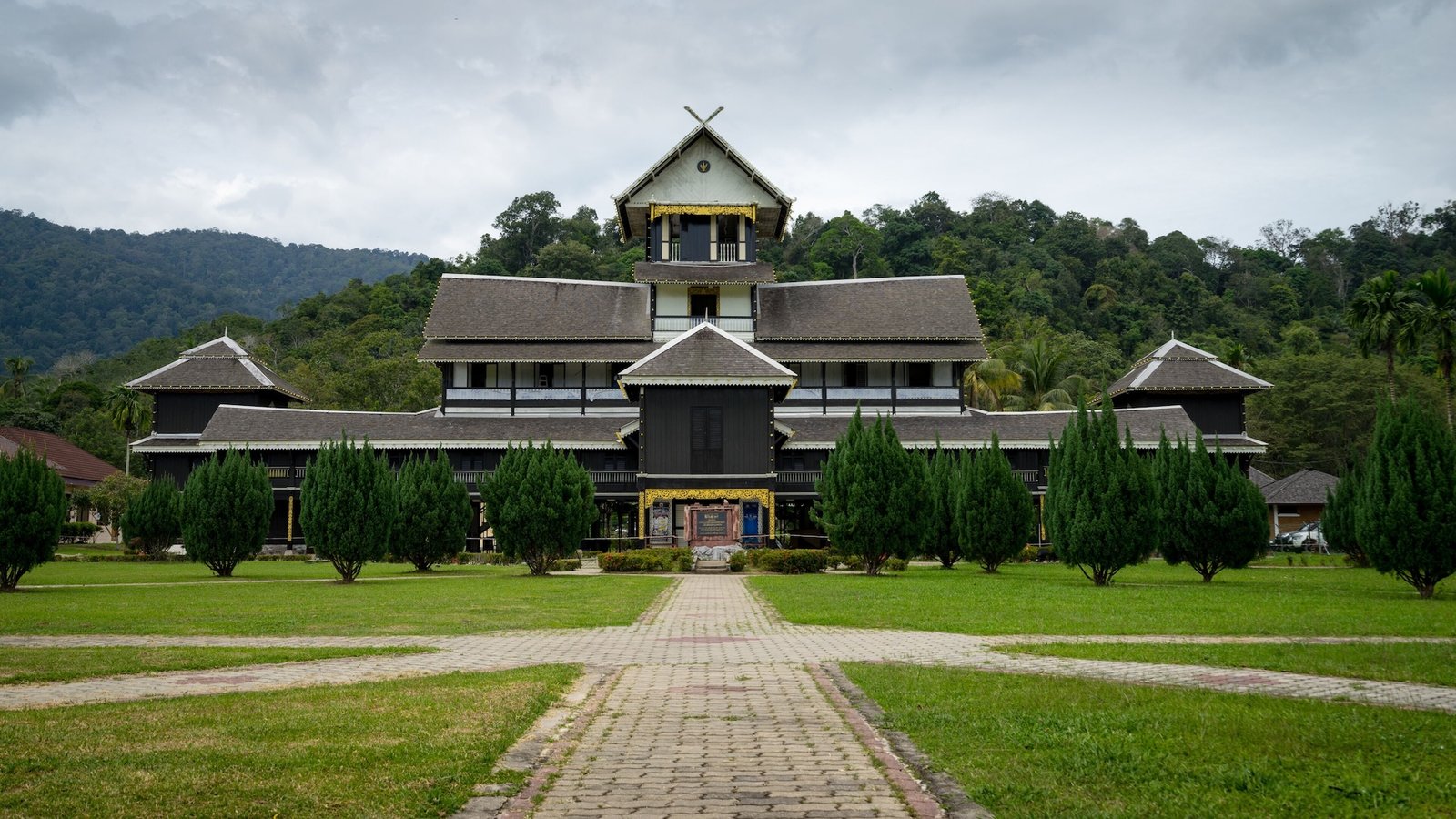
Photo Credit: Expedia Malaysia
What's your reaction?
1

AWESOME!
0

LOVED
1

NICE
0

LOL
0

FUNNY
0

EW!
0

OMG!
0

FAIL!
Popular News
Recent News


Comments
Leave a Reply