

Economy
Why Should a University Be Running a Solar Farm?
What could RM157 million buy a university?
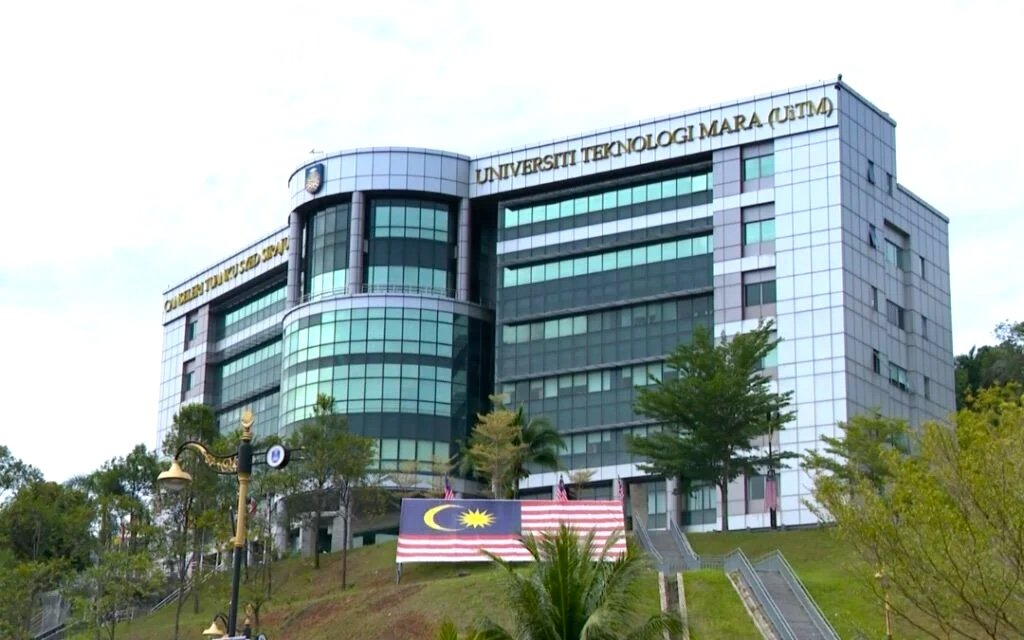
It could cover a year's fees for roughly 98,000 students, based on the annual fees published on the UiTM website. That is more people than the 87,000 or so spectators Bukit Jalil National Stadium can hold. Instead, that sum is the accumulated losses recorded between 2017 and 2021 at UiTM Holdings, a company formed under Universiti Teknologi MARA, which the Malaysian Anti-Corruption Commission (MACC) and Parliament's Public Accounts Committee (PAC) have examined.
The case is a symptom of something bigger. Across Malaysia's public higher-education sector, institutions built to teach and discover are drifting into investing, consulting and commercial operations. The question is whether that drift is good for the universities, the students or the country.
A Case Study in Mission Drift
At the centre of the UiTM Holdings inquiry is RM42 million in payments linked to a 50-megawatt solar project in Gambang, Pahang. The matter is under investigation and is not a proven corruption case. Allegedly, the losses can come from poor judgment, weak oversight or plain bad luck, and a failed investment is not automatically a crime.
A separate PAC investigation in 2024 raised a different concern. It found that UiTM had injected RM259.98 million into UiTM Holdings between 2007 and 2018 to acquire shares without the approval of the Finance Minister. PAC said this was inconsistent with the UiTM Act 1976.
Whatever the final findings, the structural question remains. A university's governance is built around academic freedom, collegial decision-making and public accountability. It is not built to assess a power-generation project, manage construction risk or negotiate commercial terms. That is a different profession, with different skills and different incentives.
When a venture goes wrong, the pressure to patch over losses with governance shortcuts compounds the damage. Weak governance and incompetence tend to travel together.
What Older Universities Learned
The world's most enduring universities are centuries old, and many survived by keeping their academic mission apart from their financial dealings. Their wealth typically sits in endowments held in trusts, not in trading companies.
Harvard's endowment is managed by Harvard Management Company, a separate entity run by professional investors. Professors do not pick the stocks. Similarly at Yale, Stanford, Oxford and Cambridge: the university benefits from the returns but professionals manage the risk.
Ideally, the lesson for Malaysia is that gifts and assets should be protected, not gambled. If a donor or company wants to give a university a solar plant, a building or a patent portfolio, it should go into a trust with independent oversight and a legal duty to preserve it for future generations. The university should not be drawn in as an "investment partner" that potentially carries a downside. Campuses, laboratories and the intellectual property from publicly funded research are national assets, and a trading subsidiary exposes them to risk by design.
Where Other Countries Drew the Line
Malaysia is not the first country to face this temptation. The experience abroad is instructive, and it points to structure rather than separation from industry.
In China, leading institutions such as Peking University and Tsinghua built large commercial conglomerates from the 1990s onward. For a time they were held up as engines of innovation. But Peking University Founder Group and Tsinghua Unigroup both went through bankruptcy restructuring around 2020 and 2021. Beijing had already been pushing universities to cut ties with the enterprises they owned, on the view that running businesses distracted them from teaching and research while exposing them to financial risk.
The United States took a different path. The Bayh-Dole Act of 1980 let universities own patents from federally funded research. Rather than run companies themselves, they set up technology transfer offices that license inventions to businesses. Stanford's licensing office, for example, helped seed a wide range of start-ups without Stanford operating any of them. The university earns royalties and sometimes equity, while founders and investors carry the commercial risk.
American universities also set limits on faculty outside work. Many, including Harvard and Stanford, follow a broad norm of about one day a week for outside professional activity, with disclosure and conflict-of-interest review. The principle is that consulting should feed teaching and research, not replace them.
In Britain, Cambridge Enterprise and Oxford University Innovation are separate, university-owned vehicles that handle licensing, spin-outs and consultancy administration. Academics stay focused on research and teaching while professionals negotiate the deals.
Germany divides the work among institutions: the Max Planck Society for basic research, the Fraunhofer Society for applied research with industry, and universities for education and research. Singapore's universities, including NUS, work closely with industry, but through dedicated enterprise arms and national research agencies with clear governance, not through professors running side businesses.
These systems differ in detail but share a pattern: separate entities, defined mandates, professional management and transparent rules.
The Quieter Problem: The Professor as Competitor
Large financial losses grab headlines. A less visible issue may matter just as much to the wider economy: academics who run consultancy work alongside a full-time, salaried university post.
There is nothing inherently wrong with a professor advising industry. If done well, it transfers knowledge and keeps teaching relevant. The concern arises when consultancy becomes a parallel commercial activity that uses institutional credibility, facilities or paid academic time to compete in a professional-services market that already exists.
That market is a recognised part of Malaysia's economy. The Ministry of Investment, Trade and Industry (MITI), through the Malaysian Investment Development Authority (MIDA), counts management consulting alongside accounting, engineering, architecture and legal services as part of the high-skilled professional-services ecosystem that supports productivity and growth.
Professional consultants operate under obligations that a moonlighting academic does not often face. They carry professional indemnity, answer to clients for outcomes, and have their reputations and livelihoods at stake. A full-time academic with a secure salary can price work below what a dedicated firm needs to survive, because the cost of running a business falls elsewhere. That is not a level playing field. It also raises a question about whether such arrangements sit comfortably with the academic's contractual obligations to the university.
This is not an AI-style disruption of consulting jobs. It is the unassuming academic lending a few hours a week to a project or business unit, and it is eroding a sector from the direction one would least expect: the one meant to supply that sector with talent.
There is a capacity question too. Ministry of Higher Education statistics for 2024 show 2,752 professors across public and private institutions, with 2,084 in public universities and 668 in private ones. There are also 7,419 associate professors nationwide, including 5,730 in public universities and 1,689 in private institutions. Many associate professors are industry practitioners who moved into teaching, and some do not hold a PhD. In many cases it is industry supporting education, not the reverse. Treating that workforce as a ready-made consulting bench overstates the applied depth it holds and understates how much its time is needed for teaching and supervision.
Research Is Not the Enemy
None of this is an argument against research that serves industry. Malaysia needs more applied research, and the national policy direction says so.
The Malaysia Higher Education Blueprint 2026–2035 calls for high-performance talent with purpose, stronger research and innovation, industry relevance, commercialisation and measurable impact. Its sixth strategic shift, Responsible Research, Development, Innovation, Commercialisation and Economy (RDICE), calls for the research ecosystem's effectiveness to be evaluated and for the economic benefits, job creation and growth from industry-led research to be measured.This can be done through systems that are already in place such as:
- CREST R&D&C&I Grant: requires at least one company and one university in each project, with the company contributing at least half of the total budget.
- Public-Private Research Network (PPRN): offers matching grants of up to RM350,000 for demand-driven innovation projects, effectively turning an industry problem into a research problem for universities.
- Academia Research Fund (AReF): proposed under the Blueprint to consolidate research funding from ideation through knowledge assimilation and technology exchange, with commercialisation and start-up support delivered through relevant agencies.
- URIIS 2026: designed to link university research with industry, investors and commercialisation pathways, drawing more than 1,000 participants from universities, industry, government agencies and the investment community.
In each model the university supplies knowledge, talent and research capacity. The company supplies the commercial problem, funding and route to market. Government provides the framework. And no university has to become a commercial operator for any of it to work.
A simple test separates healthy research collaboration from competition. Is the activity generating new knowledge, training students and advancing a field? Or is it essentially selling services at market rates to clients who could hire a professional firm? The first strengthens a university's purpose. The second dilutes it.
Unspent Money, Unmet Potential
There is also an efficiency argument. Before universities look for new ways to earn, they could make full use of what they already receive.
The Auditor-General's Report as of 30 June 2025, as reported by Bernama, found that the Ministry of Higher Education had RM110.67 million in unreturned research-grant balances involving five research universities: UM, UKM, UTM, USM and UPM. The balances covered 7,823 projects.
That suggests the binding constraint on Malaysian research is not always a shortage of funds. It may lie in project management, administrative capacity or priorities. An institution that struggles to spend grants already awarded has a weak case for expanding into commercial ventures.
The Nobel Question
This brings the debate to its most aspirational point. Malaysia has not yet produced an individual Nobel laureate, not UiTM or any other institution. MOSTI has acknowledged that the country still aspires to its first while it continues to build its scientific and research ecosystem. Malaysians have won other international honours, among them the Carlos J. Finlay Prize for Microbiology, the UNESCO Young Scientist Award, the King Faisal Award, WIPO Awards, the Al-Khawarizmi Award and the ISESCO Literacy Prize, but the Nobel remains out of reach.
Science at that level works differently from industry. Most Nobel-worthy research emerges from pure science rather than university-industry collaboration. One notable exception is the 2019 Chemistry Prize for lithium-ion batteries, though that work, too, grew from fundamental questions about materials before it became a product. It does not come from professors moonlighting on projects outside their faculties.
A country that wants a laureate must protect the conditions that produce one: stable funding, protected academic time, intellectual freedom and institutional focus. Every hour of management attention, academic time and capital diverted into running companies or chasing consulting contracts erodes those conditions. As the proverb has it, he who chases two rabbits catches neither.
A Framework for Focus
If Malaysia's public universities are to stay on mission, five principles could guide reform:
- Hold assets in trusts. Endowments, land, intellectual property and donated assets should sit in professionally managed trusts with independent oversight, not in trading subsidiaries.
- Separate commercialisation from academia. Where commercialisation is warranted, use arm's-length technology transfer offices, as at Stanford, Cambridge and Oxford. License the technology and let industry run the business.
- Regulate outside work. Set clear caps, mandatory disclosure and conflict-of-interest rules, so that consulting complements an academic's duties rather than competing with the private sector.
- Collaborate through grant-based models. Prioritise CREST, PPRN, AReF and similar schemes in which industry defines problems and funds them while universities do the research.
- Measure what matters. Judge universities on graduate employability, research quality, patents licensed and the talent they produce, not on side-business revenue.
Good Fences, Good Neighbours
Sustainable economic growth requires knowledge, governance and focused strategic intent. The old saying that good fences make good neighbours applies to universities and industry as much as to anyone. Industry has its role, consultants have theirs, government has its responsibilities and universities have theirs. The ecosystem is strongest when each does what it does best and they work together where their capabilities meet.
Universities should step back from complex investments and commercial consulting not because they lack the skills, but because those activities are not what they are uniquely suited, legally mandated and institutionally entrusted to do. That mandate is to develop knowledge and the knowledge workers who will power Malaysia through a period of rapid technological, economic and geopolitical change.
Malaysia does not need its universities to be everything to everyone. It needs them to be exceptionally good at the things only universities can do. The country's first Nobel laureate is unlikely to emerge from a solar project, a consultancy contract or an investment portfolio. More likely it will be a patient researcher in a well-supported laboratory, at an institution that never lost sight of its purpose.
Photo Credit: UITM Website
Tags:
What's your reaction?
0

AWESOME!
0

LOVED
0

NICE
0

LOL
0

FUNNY
0

EW!
0

OMG!
0

FAIL!
Popular News


Recent News


Comments
Leave a Reply